category · food & beverage
ExploringThe day, counted before it is over
A food stall's whole business fits in a head and a notebook: what came in, what sold, what is left, what the customer asked for and you did not have. Almost none of that is written down anywhere it can be looked at again. This category starts there.
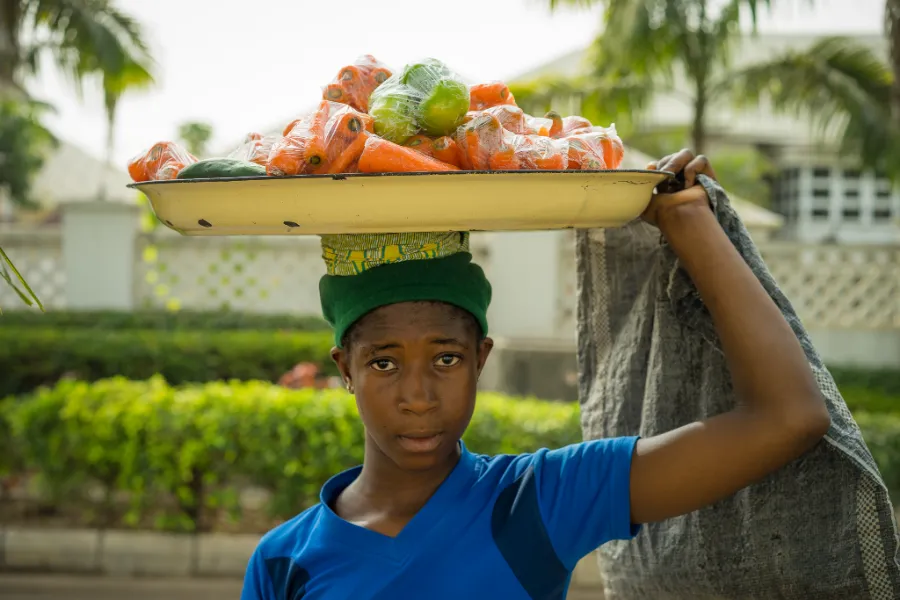
Photo: FischerFotos on Wikimedia Commons, CC BY-SA 4.0

On our roadmap
We have not started here yet. The 2 subcategories below are on our roadmap, and we will take them on in time.
Kitchen
Recipes that scale and cost themselves.
Restaurants, caterers and home cooks lose money on dishes they never properly costed.
- Recipe costing
- Catering planner
- Local recipes, recorded
Stall & sales
Counting the day at a food stall or tuck shop.
Street food and tuck shops feed a large share of every city, and almost all of it runs on cash and memory.
- Daily sales tally
- Mobile money
- Supplier orders
What we'd build
Four ideas, in the order we would test them. None are built.
-
01
A day that adds up
Sales and stock entered once, at the stall, on the phone that is already in the owner's pocket. What came in, what went out, what is sitting there at close — visible at close, not reconstructed the following week from memory.
-
02
A menu that follows the market
Prices that move with what the trader actually paid this morning, marked with the date they were last confirmed. A customer who comes back on Friday should not be quoted Friday's price from a board written in January.
-
03
Less food thrown away
What sells on a Tuesday is not what sells on a Saturday. Simple day-to-day signals that tell a stall what to cook and a vendor what to buy — so tomorrow's stock is closer to tomorrow's crowd, and the unsold maize has somewhere to go instead of into a bin.
-
04
For the cup, not only the plate
Beverage is a different business from food: cold chain, cup sizes, sugar and ice, and a margin that lives or dies on the cost of a drink. Chapati and a cold glass are sold by the same stall in the same hour, and almost no software treats them as the same problem.
Where it stands
Exploring
Desk research, and the first conversations would be with people already keeping the books by hand. The honest risk here is that the answer is not a new app — it is that a trader with fifteen items and a good memory has no problem worth software, and the notebook is faster than we are.
We would want to be told that before building it. This category overlaps Commerce and Agriculture on purpose, and where a food trader is really a small business, the right home for the tool may be Commerce rather than here.